When you’re pregnant, the choices you make about supplements can feel overwhelming. Collagen, known for its potential benefits to skin elasticity and joint health, often comes up in conversations. While many people consider it safe during pregnancy, the research is still limited. It’s crucial to understand both the potential benefits and risks before adding it to your routine. So, what should you know about collagen and its effects during this important time?
What Is Collagen and Why Is It Popular During Pregnancy?
Collagen, a vital protein found throughout your body, plays a crucial role in maintaining skin elasticity, joint health, and overall structural integrity.
During pregnancy, your body undergoes significant changes, making collagen particularly popular among expectant mothers. Many believe it can help with skin stretch marks and may support joint health as your body adapts to carrying a growing baby.
Additionally, collagen may aid in the healing process after childbirth. While some studies suggest potential benefits, it’s essential to approach collagen supplementation with caution. Not all collagen sources are equal, and you should consult with your healthcare provider to ensure it aligns with your nutritional needs and safety during pregnancy.
Research indicates that Type I & III collagen can be particularly beneficial for skin and joint support, which may be valuable during this time of physical change. Understanding collagen’s role can help you make informed choices.
Is Collagen Safe to Take During Pregnancy?
Wondering if it’s safe to take collagen during pregnancy? While collagen supplements are generally considered safe, it’s essential to approach them with caution.
Currently, there isn’t extensive research specifically examining collagen’s effects during pregnancy. Most experts agree that collagen is a protein and may not pose significant risks, but quality matters.
Opt for reputable brands that undergo third-party testing to ensure purity and safety. Additionally, consult your healthcare provider before starting any new supplement. They can help assess your individual needs and potential risks.
How Collagen May Benefit Skin and Joint Health During Pregnancy
As your body undergoes numerous changes during pregnancy, maintaining skin elasticity and joint health becomes crucial. Collagen plays a vital role in supporting your skin structure, which can help reduce the appearance of stretch marks as your belly expands. It may also promote hydration, keeping your skin looking healthy and radiant.
Additionally, your joints may experience increased stress due to weight gain and hormonal changes. Collagen can support joint integrity, potentially easing discomfort and improving mobility.
While research on collagen specifically during pregnancy is limited, its role in skin and joint health is well-documented. Always consult your healthcare provider before adding any supplements to ensure they’re appropriate for your individual needs during this special time.
Types of Collagen Supplements
When considering collagen supplements, it’s important to know that not all types are created equal. There are several types of collagen, with Type I being the most abundant in your body, supporting skin and bone health.
Type II is primarily found in cartilage, making it beneficial for joint health. You might also encounter Type III, which complements Type I and helps skin elasticity.
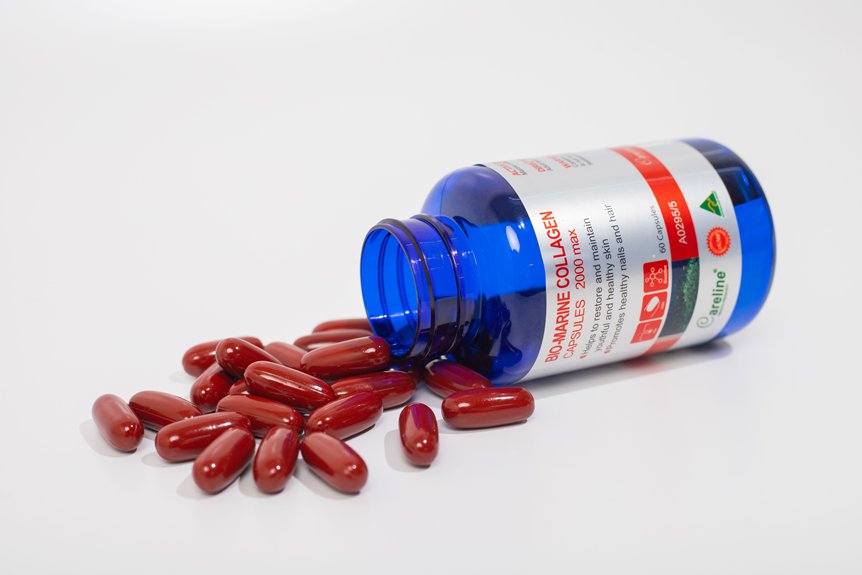
Collagen supplements come in various forms, including powders, capsules, and liquids, each offering unique absorption rates. Hydrolyzed collagen, or collagen peptides, is often preferred for its enhanced bioavailability.
It’s essential to choose a reputable brand that sources its collagen responsibly, ensuring you’re getting a quality product that aligns with your health goals during pregnancy.
What Are the Risks or Side Effects of Collagen?
While collagen supplements can offer benefits during pregnancy, it’s important to be aware of potential risks and side effects. Some women may experience digestive issues, including bloating or diarrhea.
Allergic reactions, though rare, can occur, especially if you’re sensitive to the source of the collagen, like fish or bovine products. Additionally, the long-term effects of collagen supplementation during pregnancy aren’t well-studied, raising concerns about safety.
It’s also essential to consider the quality of the supplement, as contaminants may pose risks. Always consult your healthcare provider before adding collagen to your routine, ensuring it aligns with your specific health needs and pregnancy progression.
Being informed can help you make safer choices for you and your baby.
Incorporating Collagen Into Your Pregnancy Routine
Incorporating collagen into your pregnancy routine can enhance your overall well-being, provided you do so thoughtfully. You can start by choosing high-quality collagen supplements or powders, ideally from reputable sources.
Mixing collagen into smoothies, oatmeal, or yogurt is an easy way to include it in your diet.
Always consult your healthcare provider before adding new supplements, especially during pregnancy. They can help you determine the right dosage based on your individual needs.
Pay attention to how your body reacts; if you experience any adverse effects, it’s wise to reconsider your intake.
Expert Opinions on Collagen and Pregnancy
What do experts say about collagen’s role during pregnancy? Many health professionals recognize collagen as a beneficial supplement, primarily for skin elasticity and joint health.
While some studies suggest it may support skin hydration and reduce stretch marks, definitive research specifically on pregnant women is limited.
Experts generally agree that collagen is safe to take during pregnancy, but they recommend consulting with your healthcare provider first.
They emphasize that a balanced diet rich in nutrients is crucial for both you and your baby.
If you decide to incorporate collagen, choose high-quality sources and monitor your body’s response.
Other Supplements for Pregnancy Wellness
How can you ensure optimal health during pregnancy? Apart from collagen, consider other essential supplements.
Folic acid is crucial for fetal development, reducing the risk of neural tube defects. Iron helps prevent anemia, especially as your blood volume increases. Calcium supports bone health for both you and your baby, while vitamin D aids calcium absorption.
Omega-3 fatty acids, particularly DHA, are vital for brain development. Always consult your healthcare provider before starting any supplement regimen; they’ll help tailor your needs based on your diet and health status.
Frequently Asked Questions About Collagen and Pregnancy?
Wondering about the role of collagen during pregnancy? Many expectant mothers have questions about its safety and benefits.
Collagen supplements are generally considered safe during pregnancy, but it’s crucial to choose high-quality products. Collagen supports skin elasticity, which may help with stretch marks, and it also contributes to joint health.
However, always consult your healthcare provider before adding any supplement to your routine. They can offer personalized advice based on your specific health needs.
It’s also important to remember that a well-balanced diet rich in protein, vitamins, and minerals is essential for overall wellness during pregnancy.
If you’re considering collagen, ensure it complements a healthy lifestyle rather than replacing whole food sources.