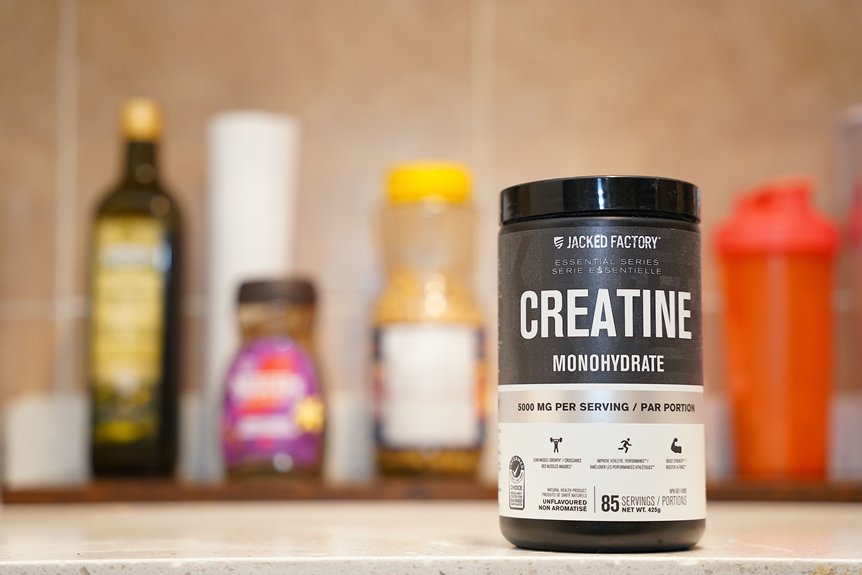
When considering whether creatine is good for you, it’s essential to understand its role in enhancing energy production and performance, especially in high-intensity activities. Many athletes and active individuals find it beneficial for improving strength and muscle growth. However, potential side effects and the best ways to supplement must also be factored in. So, what exactly do you need to know before deciding if creatine is the right choice for your fitness goals?
What Is Creatine and How Does It Work?
Creatine, a naturally occurring compound found in small amounts in certain foods and synthesized in the body, plays a crucial role in energy production during high-intensity activities.
It primarily exists in muscle cells, where it helps replenish adenosine triphosphate (ATP), the primary energy carrier in your body. When you engage in short bursts of intense exercise, your ATP stores deplete rapidly.
Supplementing with creatine increases your muscle creatine phosphate levels, allowing for quicker ATP regeneration. This can enhance your performance in activities like sprinting, weightlifting, and high-intensity interval training.
Research shows that creatine supplementation can also support muscle growth and recovery, making it a popular choice among athletes and fitness enthusiasts alike. Additionally, it has been found to be particularly beneficial for older adults, as it helps address age-related muscle loss and enhances overall energy levels.
The Science Behind Creatine’s Performance Benefits
Research highlights several key mechanisms through which creatine enhances athletic performance.
First, it increases your muscle’s phosphocreatine stores, which aids in ATP production during short bursts of high-intensity exercise. This boost in energy availability can lead to improved strength and power output.
Second, creatine enhances muscle recovery by reducing inflammation and muscle cell damage after intense workouts. Additionally, it may promote muscle protein synthesis, supporting lean mass gains.
Studies also suggest that creatine impacts hydration status, drawing water into muscle cells, which can improve performance and endurance.
Who Can Benefit Most From Creatine Supplementation?
Who stands to gain the most from creatine supplementation? Athletes engaged in high-intensity, short-duration activities, like sprinting or weightlifting, can see significant benefits. Research shows that creatine boosts performance by enhancing energy production during intense exercise.
Additionally, older adults may benefit from creatine’s role in muscle preservation and strength improvement, helping combat age-related muscle loss.
Vegetarians and vegans may also find creatine supplementation advantageous, as their diets often lack natural sources of this compound.
Finally, individuals recovering from injuries or surgeries could experience faster recovery times with creatine, as it aids in muscle regeneration.
Common Side Effects of Creatine and How to Manage Them
Have you ever wondered about the potential side effects of creatine supplementation? While many people tolerate creatine well, some may experience side effects like gastrointestinal discomfort, bloating, or muscle cramping.
These issues often arise from excessive dosing or inadequate hydration. To manage these side effects, consider starting with a lower dose and gradually increasing it, allowing your body to adjust. Staying well-hydrated can also help alleviate bloating and cramping.
Some individuals may notice weight gain due to water retention, which is typically harmless but can be concerning. If you experience persistent side effects or have underlying health conditions, it’s wise to consult a healthcare professional.
Understanding these potential side effects can help you make informed decisions about creatine use.
Taking Creatine: Dosage and Timing Tips
Understanding how to effectively take creatine can significantly enhance its benefits while minimizing potential side effects. A typical dosage is 3 to 5 grams per day, which is generally sufficient for most individuals.
If you’re starting, consider a loading phase of 20 grams per day for the first week, divided into four doses, before shifting to the maintenance dose.
Timing can also play a role; taking creatine post-workout, along with carbohydrates and protein, can improve muscle absorption.
Staying well-hydrated is crucial, as creatine draws water into your muscles.
Consistency is key, so make sure you take it daily for optimal results.
Always consult with a healthcare professional before starting any supplementation regimen.
Debunking Common Creatine Myths
Why do so many myths surround creatine? One common misconception is that it causes dehydration. While creatine does draw water into muscle cells, it doesn’t lead to overall dehydration if you maintain proper fluid intake.
Another myth is that it’s only for bodybuilders. In reality, creatine benefits various athletes, enhancing performance in high-intensity activities.
Some believe it’s harmful to kidneys, but research shows that healthy individuals can safely take it without adverse effects.
Finally, many think creatine leads to excessive weight gain; however, the initial weight increase is primarily due to water retention, not fat.
Understanding these myths can help you make informed decisions about using creatine effectively.
Should You Use Creatine? Here’s How to Decide?
When considering whether to use creatine, it’s essential to evaluate your specific fitness goals and lifestyle. If you aim to increase muscle mass, enhance strength, or improve performance in high-intensity activities, creatine could be beneficial.
Research shows it effectively boosts ATP production, which fuels short bursts of energy.
However, if you’re primarily focused on endurance training, the benefits may be less pronounced.
It’s also crucial to consider any pre-existing health conditions or medications that might interact negatively with creatine. Always consult a healthcare professional before starting any supplement.
Lastly, remember that proper hydration and a balanced diet are vital for maximizing any potential benefits from creatine.
Make an informed choice that aligns with your individual needs and health status.