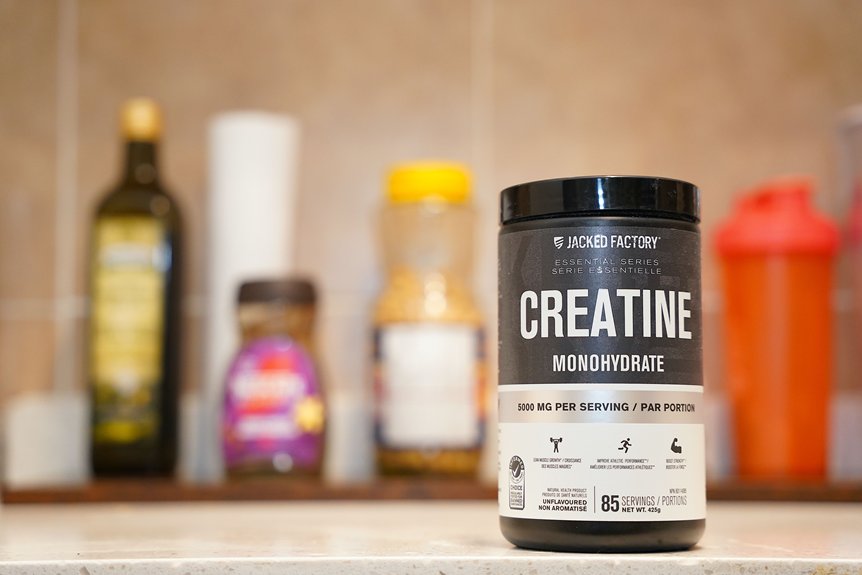
Imagine a bridge connecting nutrition and performance—this is where creatine stands. Often misunderstood as a steroid, it’s crucial to clarify that creatine is a natural compound, not a synthetic hormone. While both are popular among athletes, they serve different purposes. Understanding these distinctions can impact your training and supplementation choices significantly. What else should you know about creatine’s role in enhancing athletic performance?
What Is Creatine and How Does It Work?
Creatine is a naturally occurring compound found in small amounts in certain foods and synthesized in the body. It plays a key role in energy production, particularly during high-intensity exercise.
When you consume creatine, it increases phosphocreatine stores in your muscles, which helps regenerate ATP, the primary energy currency of your cells. This boost can enhance your performance in short bursts of intense activity, like sprinting or weightlifting.
Additionally, creatine may support muscle growth by promoting cell hydration and increasing satellite cell activity. Notably, it has been shown to be effective in addressing age-related muscle loss, particularly in adults over 50, as evidenced by its inclusion in products like NativePath Native Creatine.
However, while it’s widely used as a supplement among athletes, understanding its mechanisms and effects is essential for making informed decisions about its use in your fitness regimen.
Key Differences Between Creatine and Steroids
While both creatine and steroids are popular among athletes seeking performance enhancement, they serve very different purposes and operate through distinct mechanisms.
Creatine is a naturally occurring compound that helps improve short bursts of energy during high-intensity activities, primarily enhancing muscle recovery and strength. It works by increasing phosphocreatine stores in your muscles, allowing for more ATP production.
On the other hand, steroids, specifically anabolic steroids, are synthetic derivatives of testosterone that promote muscle growth and overall physical performance. They can lead to significant increases in muscle mass and strength but come with various health risks and side effects.
Understanding these differences is crucial for making informed choices about supplementation and performance enhancement.
Benefits of Creatine for Athletes and Bodybuilders
For athletes and bodybuilders looking to enhance their performance, incorporating creatine into their regimen can provide several significant benefits.
First, creatine boosts your energy levels during high-intensity workouts, allowing you to perform more repetitions and lift heavier weights. This can lead to increased muscle mass over time.
Second, it aids in quicker recovery between sets, helping you maintain intensity throughout your training sessions.
Additionally, creatine may enhance muscle hydration, promoting a fuller appearance and potentially improving overall muscle function.
Lastly, research suggests that it may support cognitive function during intense training, keeping you mentally sharp.
Debunking Popular Myths About Creatine Use
What misconceptions surround creatine use? Many believe that creatine is a steroid, but that’s not true. Creatine is a naturally occurring substance in your body, found in foods like meat and fish. It helps supply energy to your muscles during high-intensity exercise.
Another common myth is that creatine causes dehydration or kidney damage. Research shows that when used appropriately, creatine is safe for most healthy individuals.
Some worry it leads to excessive weight gain; however, this is often just water retention, not fat gain.
Lastly, people think you need to cycle creatine, but continuous use is generally safe. By understanding the facts, you can make informed decisions about incorporating creatine into your fitness regimen.
Long-Term Safety of Creatine: What You Need to Know?
Although many athletes and fitness enthusiasts incorporate creatine into their routines, questions about its long-term safety persist.
Research indicates that creatine is generally safe for most individuals when used at recommended doses. Studies show minimal side effects, primarily gastrointestinal discomfort or water retention.
However, some concerns remain regarding kidney function, especially in those with pre-existing conditions. It’s crucial to consult a healthcare professional before starting supplementation, particularly if you have underlying health issues.
Staying hydrated can also mitigate potential side effects.