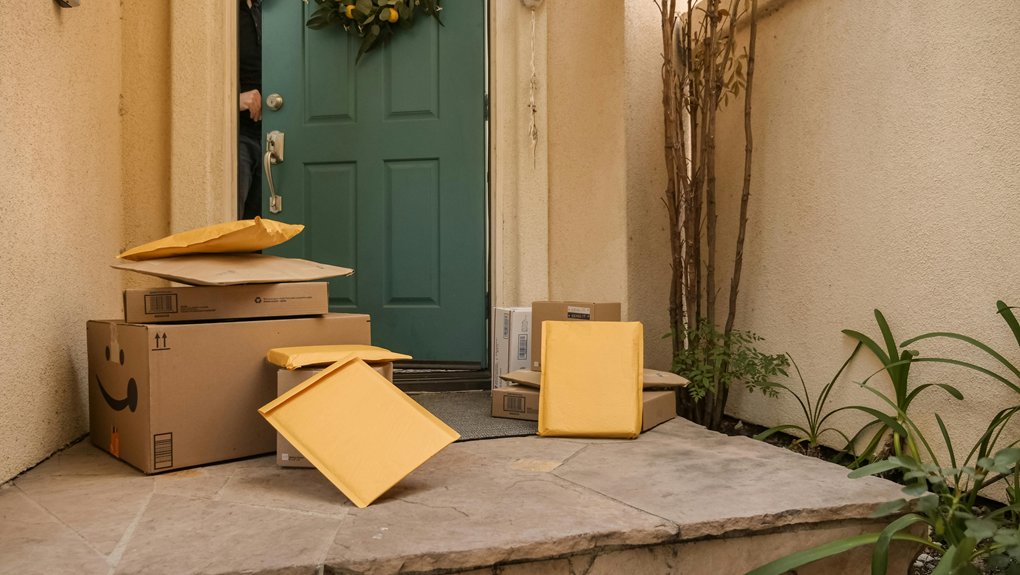
You might have noticed mysterious packages arriving at your door, and you’re not alone. This phenomenon is part of a deceptive practice known as brushing scams, where sellers use fake identities to send unsolicited items. But why are they doing this, and what does it mean for you? Understanding the mechanics behind these scams can help you recognize the signs and protect yourself from potential fraud. Let’s explore the troubling details behind these unsolicited deliveries.
Understanding Brushing Scams
Brushing scams occur when a seller sends unsolicited packages to individuals, often using fake identities, to artificially inflate their sales and ratings.
These deceptive practices can leave you puzzled when you receive unexpected items at your door. You might wonder why you’ve received a product you didn’t order, or how your address ended up on a seller’s list.
Typically, the seller is trying to create an illusion of credibility and increase their ranking on e-commerce platforms.
It’s important to know that participating in such scams can compromise your personal information.
If you receive a suspicious package, don’t hesitate to report it to the platform or local authorities. Awareness is key to protecting yourself and others from these fraudulent schemes.
How Brushing Scams Work
While you may think you’re simply receiving an unexpected package, what’s actually happening is part of a coordinated scam designed to manipulate online marketplaces.
In a brushing scam, a seller uses your information to create fake orders, usually without your consent. They send you items, often low-value goods, to boost their sales rankings and positive reviews. By doing this, they appear more reputable to potential buyers.
You might wonder how they get your address; often, they acquire it through data breaches or third-party websites. This deceptive practice not only misleads consumers but can also undermine the integrity of the marketplace.
If you receive a package you didn’t order, it’s essential to report it to the platform involved.
Common Items Sent in Brushing Scams
Many people receive unexpected packages containing a variety of low-value items as part of brushing scams. These items typically include cheap electronics like phone chargers, fashion accessories such as bracelets or sunglasses, and household goods like kitchen gadgets.
Often, you might find unsolicited samples of beauty products or novelty items, which seem harmless but serve a purpose for scammers. They use these products to create fake reviews or increase their sales rankings on e-commerce platforms.
While these packages might appear innocuous, they can clutter your home and signal a breach of your personal information. If you receive one of these packages, it’s important to report it and consider monitoring your accounts for any suspicious activity.
Why Sellers Engage in Brushing Scams
Sellers engage in brushing scams primarily to manipulate their product rankings and generate fake credibility on e-commerce platforms. By sending unsolicited packages to random addresses, they create false shipping confirmations and reviews.
This tactic boosts their products’ visibility, making them appear more popular and reliable to potential buyers. As you might expect, higher rankings lead to increased sales, allowing these sellers to outpace legitimate competitors.
Additionally, fake reviews can enhance a product’s reputation, further driving consumer interest. Ultimately, brushing scams exploit the trust that online shoppers place in ratings and reviews, undermining the integrity of e-commerce.
Signs You Might Be a Victim
You might be a victim of brushing scams if you receive packages you didn’t order or find unfamiliar items in your mailbox. These packages often contain low-value goods like clothing or electronics.
If you notice your name or address being used in online reviews for products you’ve never purchased, that’s another red flag. Check your online accounts; if you see unfamiliar activity or unauthorized purchases, it’s time to act.
Additionally, if you start receiving strange emails or notifications from unfamiliar sellers, it could indicate your information is compromised. Stay vigilant about your personal data and monitor your accounts regularly.
If you suspect a brushing scam, report it to the appropriate authorities and consider changing your passwords.
The Impact of Brushing Scams on Consumers
While brushing scams may seem harmless at first glance, they can greatly impact consumers by compromising personal information and undermining trust in online shopping.
Here’s how these scams affect you:
- Identity Theft: Your personal details might be exposed, leading to potential fraud.
- Financial Loss: Unauthorized purchases can drain your finances without your knowledge.
- Disrupted Shopping Experience: Receiving unsolicited packages can confuse and frustrate you.
- Erosion of Trust: You may become wary of legitimate online retailers, affecting your shopping habits.
- Increased Spam: Scammers often sell your information, leading to more unwanted communications.
Understanding these risks is vital for safeguarding your online shopping experiences and personal data.
What to Do If You Receive a Mysterious Package
Receiving a mysterious package can be unsettling, especially in light of the risks posed by brushing scams. First, don’t panic. Check the package for any identifying information, like a return address or tracking number.
If it’s from an unfamiliar sender, it’s wise to avoid opening it. You should document the package by taking photos, especially if it looks suspicious.
Next, reach out to the shipping company for more details. If you suspect it’s part of a scam, contact your bank to monitor any unauthorized transactions.
Finally, consider talking to neighbors. They might’ve received similar packages, providing further context.
Always prioritize safety—if the situation feels dangerous, contact local authorities for assistance.
How to Report a Brushing Scam
Reporting a brushing scam is essential to help protect yourself and others from potential fraud.
If you’ve received unsolicited packages, take action immediately. Follow these steps to report the scam:
- Document all relevant details, including tracking numbers and dates.
- Contact the retailer or company associated with the packages.
- Report the scam to the Federal Trade Commission (FTC) at ReportFraud.ftc.gov.
- Notify your credit card company or bank if you notice unauthorized charges.
- Consider filing a report with your local law enforcement agency.
Tips to Protect Yourself From Brushing Scams
To safeguard yourself from brushing scams, it’s crucial to stay vigilant and proactive.
First, regularly monitor your online accounts and credit reports for unauthorized activity. If you receive unexpected packages, don’t open them; report them to the retailer or delivery service.
Use unique passwords for your online accounts and enable two-factor authentication whenever possible. Avoid sharing personal information, like your address, on public forums and social media.
Be cautious of unfamiliar sellers on e-commerce platforms and check reviews before making purchases. If a deal seems too good to be true, it probably is.
Finally, educate yourself about common scams to recognize red flags quickly. Staying informed is your best defense against brushing scams.
The Future of E-Commerce and Brushing Scams
As e-commerce continues to evolve, so do the tactics employed by scammers, particularly in the domain of brushing scams. You need to stay informed about these changes to protect yourself effectively.
Here’s what to expect in the future:
- Increased sophistication in scam tactics
- More reliance on automation and AI for fraudulent activities
- Development of advanced tracking technology to evade detection
- Enhanced consumer awareness campaigns from e-commerce platforms
- Possible regulatory measures to curb malicious practices
Understanding these trends can help you better navigate the e-commerce landscape.