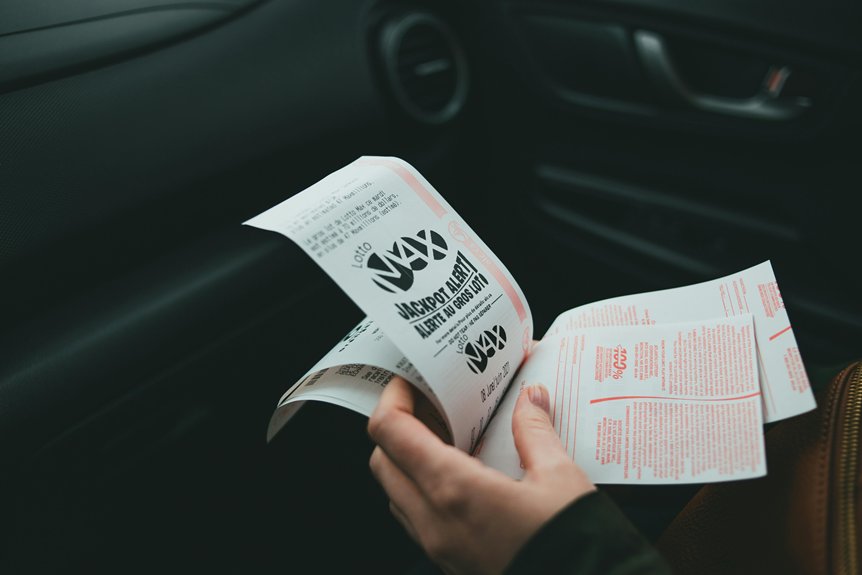
When you think about buying more lottery tickets, you might wonder if it really improves your chances of winning. Sure, purchasing additional tickets gives you more chances, but the increase is often minimal. The odds are still heavily stacked against you, regardless of how many tickets you buy. So, is it worth it? Let’s break down the math and see what it really means for your chances of hitting the jackpot.
Understanding Lottery Odds
When you buy a lottery ticket, understanding the odds can help you make informed choices. Each lottery game has specific odds that determine your chances of winning. These odds reflect how likely it’s for you to match the winning numbers.
Generally, the more numbers you need to match, the longer the odds are against you. It’s essential to know that buying multiple tickets doesn’t greatly increase your chances. For instance, if the odds are one in a million, purchasing ten tickets shifts your odds to ten in a million—a small improvement.
Recognizing these odds allows you to set realistic expectations and enjoy the game without getting swept up in the excitement. Informed decisions can enhance your overall lottery experience. Additionally, using tools like AI-powered software can help you develop a more strategic approach to playing the lottery.
The Mathematics of Probability
Understanding lottery odds leads to a deeper appreciation of probability and how it shapes your chances of winning. When you buy a lottery ticket, you’re entering a game governed by mathematical principles.
Each ticket you purchase doesn’t simply add to your chances; it alters the overall probability of winning. For example, if the odds of winning a game are 1 in 1,000, buying two tickets raises your odds to 2 in 1,000, or 1 in 500.
However, these odds still reflect a low probability. It’s essential to recognize that while buying more tickets can improve your chances slightly, the fundamental odds remain heavily against you. Additionally, using tools like Lottery Defeated software can help you optimize your number selection strategy, potentially increasing your chances of hitting a jackpot.
Understanding this helps you make informed decisions about how many tickets to purchase.
Common Misconceptions About Ticket Purchasing
Why do so many people believe that buying more lottery tickets guarantees a better chance of winning? This misconception stems from a misunderstanding of probability.
You might think that purchasing multiple tickets increases your odds, but it’s essential to remember that each ticket has an independent chance of winning. Buying ten tickets doesn’t mean you’re ten times more likely to win; it simply means you have more chances against the same total odds.
Some folks also assume that if others have bought many tickets, their chances decrease, but that’s not how lotteries work. Each draw is random, and the outcome doesn’t change based on how many tickets anyone else buys.
Understanding these facts can help clarify your expectations when playing.
Analyzing the Impact of Multiple Tickets
Although it might seem logical to think that buying multiple lottery tickets increases your chances of winning, the reality is a bit more complex. Each ticket you buy does improve your odds, but not by as much as you might expect.
For example, if a lottery has one winning combination out of a million, purchasing ten tickets only raises your odds to ten in a million. That’s still a long shot.
Furthermore, the excitement of winning can cloud your judgment. You might get swept up in buying more tickets without considering the diminishing returns.
Ultimately, while multiple tickets can marginally boost your chances, they won’t guarantee a win and can lead to overspending, so always play responsibly.
Expected Value and Lottery Spending
Buying multiple tickets might slightly improve your odds, but it’s important to evaluate the expected value of your lottery spending. The expected value represents the average amount you’d win per ticket if you played many times.
Most lotteries have a negative expected value, meaning you’re likely to lose money over time. For instance, if a ticket costs $2 and the jackpot is $1 million, your odds of winning might be 1 in 292 million. Even with multiple tickets, the chances remain slim.
As you calculate your expected value, consider the cost of tickets versus the potential payout. Understanding this can help you make informed decisions about how much to spend and whether it’s worth it in the long run.
Strategies for Responsible Play
While the thrill of playing the lottery can be enticing, establishing strategies for responsible play is vital to guarantee you enjoy the experience without financial strain.
First, set a budget and stick to it; decide how much you’re willing to spend before you start. It’s essential not to exceed this limit, no matter how tempting it may be.
Next, treat lottery tickets like entertainment, not an investment. Understand that the odds are stacked against you, and winning is never assured.
Also, avoid chasing losses; if you don’t win, resist the urge to buy more tickets in hopes of recouping losses.
Finally, regularly evaluate your lottery spending to make certain it remains a fun and lighthearted activity rather than a financial burden.
Real-Life Examples and Case Studies
When exploring real-life examples of lottery players, you can gain valuable insights into their motivations and outcomes.
Take the case of a group of friends who pooled their money to buy tickets for a big jackpot. They increased their odds collectively, but their winnings were shared, demonstrating that buying more tickets can improve chances, but only if you’re willing to split the prize.
In contrast, a single player bought multiple tickets and won a smaller prize, highlighting that individual strategies can yield mixed results.
These examples show that while investing in more tickets may heighten your chances, the outcomes can vary considerably based on how you approach the game.
Ultimately, it’s about balancing your investment with realistic expectations.
Conclusion
To sum up, while buying more lottery tickets does slightly boost your chances of winning, it’s essential to keep your expectations realistic. The odds remain heavily stacked against you, and purchasing multiple tickets doesn’t guarantee success. Instead, focus on enjoying the game for its entertainment value and set a budget that won’t strain your finances. Remember, playing responsibly is key—so have fun, but don’t let the thrill of the lottery overshadow your financial well-being!